LET’S CLEAR SOME THINGS UP
About Acne.
Over 50 million Americans suffer from acne, with the incidence of acne in adults increasing. In fact, acne is the most common skin disease in the world and is the number one reason that people visit a dermatologist.
If left unresolved, acne can lead to permanent scarring and issues with confidence and self-esteem.


MYTHS + FACTS
The Truth About Acne May Surprise You.
Acne is not a short-term condition — it can persist for years or even decades.
Acne is not caused by dirty skin.
Diet has little to no effect on your acne.
Scrubbing your skin many times a day will not get rid of acne.
Genetics play a role in whether you develop acne and how severe it is.
What Really Causes Acne.
When your body produces excess sebum (the term for oils on your skin), it mixes with your dead skin cells and clogs your pores. Bacteria often get trapped in the clogged pores and trigger inflammation, causing red and pus-filled pimples.
Many treatments target other causes of acne, but not the production of sebum which is the root cause. Those other treatments won’t provide lasting improvement. Your acne will return if you stop treatment or don’t use products every day.


ACNE TYPES
The 6 Types Of Acne.
BLACKHEADS
Blackheads: Open comedones on the skin filled with oil and dead skin.

WHITEHEADS
Whiteheads: Closed comedones that remain closed by oil and dead skin.

PAPULES
Papules: Red, raised blemish on the skin’s surface with no whitehead.

PUSTULE
Pustule: red, inflamed blemish on the skin’s surface with a whitehead.

NODULE
Nodule: large, inflamed blemish, hard to touch, deeper in the skin, painful.

CYSTS
Cysts: large, inflamed blemish, soft to touch, fluid filled, can be very painful.

ACNE SEVERITY
How Severe Is Your Acne?


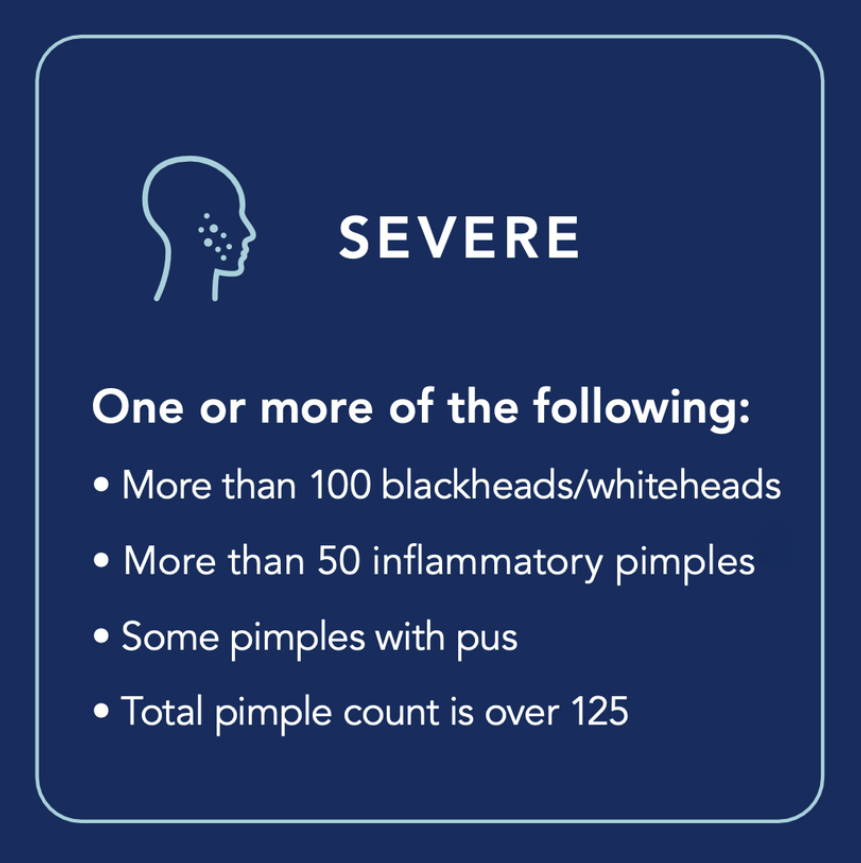
The more severe your acne is, the more challenging it is to treat using traditional methods.
Furthermore, the longer it takes to effectively treat acne, the higher the risk for permanent acne scarring.
ARE YOU READY FOR LIFE WITHOUT ACNE?
Move Forward With AviClear®.
If you've been feeling frustrated and overwhelmed because of your acne, it's time to take that first step towards clear, smooth, acne-free skin.
Get prequalified for a payment plan today, and make a commitment to leave your acne in the past.
